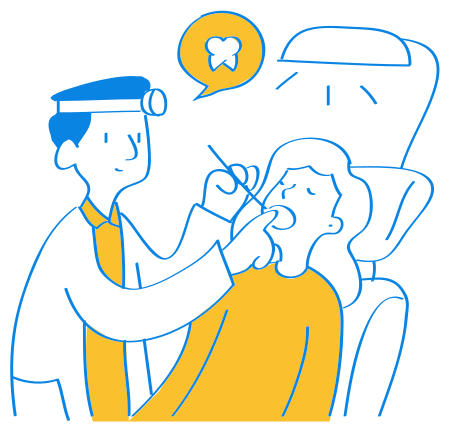
Dentist

A dentist treats teeth and gums and helps people smile without pain or embarrassment. If you enjoy biology, pay attention to small details and do not mind working very close to other people, this career could suit you. A good dentist does more than treat teeth: they can also calm down a patient who is afraid to sit in the chair.

Dentist

This is precise hands-on work: the tools are tiny, mistakes are visible, and patients differ in age and temperament. Dentistry has several branches, including general treatment, surgery, orthodontics, prosthetics and pediatric dentistry, so over time you can choose your own. The training is long, and you will keep learning throughout your career because technology and materials change quickly.

What the job involves

  • Examines patients and makes a diagnosis
  • Treats cavities and places fillings
  • Cleans teeth and teaches proper dental care
  • Removes teeth or refers patients to a specialist
  • Takes X-rays and keeps medical records

Skills you need

  • Steady hands

    Working confidently with small instruments in a tight space.

  • Biology and chemistry

    Understanding anatomy, body processes and the properties of dental materials.

  • Talking to patients

    Explaining treatment in simple words and helping people feel at ease.

  • Responsibility

    Following strict hygiene rules and taking ownership of patient health.

  • Staying calm under pressure

    Keeping your cool with a difficult case or a nervous patient.

Who it suits

Personality types

Strong intelligences

  • Bodily-kinesthetic
  • Interpersonal
  • Naturalistic

UNT subjects to take

Where to study

In Kazakhstan, dentists are trained at medical universities, such as Asfendiyarov Kazakh National Medical University, Astana Medical University and Karaganda Medical University. The core program takes about 5 years, and working in a specialty usually requires residency afterwards. Competition for state grants is high, so it pays to start preparing for the UNT early.

If you want to start sooner, you can enter a medical college after grade 9 or 11 to train as a dental technician. Dental technicians make crowns, dentures and other appliances in a lab, but they do not treat patients. It is a good way to test whether you like dentistry before going on to university.

Outlook

Dentists work in public clinics, private practices, children's dental clinics and hospitals, and many eventually open their own practice. Kazakhstan has a lot of private dental clinics, so experienced dentists are needed both in big cities and in the regions. To grow, you have to keep learning new materials, equipment and treatment methods.

Frequently asked questions

Which UNT subjects do I need to become a dentist?

Dentistry requires the biology and chemistry subject pair. Score requirements for medical programs are usually higher than for many others, so check the current rules in advance.

How many years does it take to become a dentist?

The core program at a medical university takes about 5 years. To become a specialist, such as an orthodontist or oral surgeon, you usually complete a residency after that.

Can I become a dentist if I am afraid of blood?

Blood does come up in dentistry, especially in surgery, but usually in small amounts, and even less in general treatment and orthodontics. Many students get used to it during training. If your fear is strong, test yourself early, for example by visiting a clinic.

Is this career right for you?

Take the MBTI and Gardner tests: the report shows which directions fit you personally.

Take the free test